Friday, February 27, 2026.
Stronger Together: The Untapped Power of the Expat Community
I look around and see dozens of expat groups, thousands of people from every imaginable background. Americans, Canadians, Europeans, Asians, fellow Latinos, and yes… even a few Wisconsinites like me. We come from different cultures, political perspectives, professions, and life stories. Middle-of-the-roaders, idealists, hardliners, you name it. The diversity is real.
What surprises me isn’t our differences. It’s how often we allow those differences to divide us.
When we move abroad, we all step into unfamiliar territory. Different systems, different rules, different rhythms of life. That alone should be enough to remind us that we have more in common than we think. Yet too often, I see external political frustrations, old grudges, or ideological battles imported into spaces that could otherwise be constructive, supportive communities.
The bigger picture we’re missing is this: by sheer numbers alone, expats represent influence. Knowledge. Experience. Resources. Networks. If we operated like a well-oiled machine, sharing information, helping newcomers, supporting businesses, guiding each other through bureaucracy, celebrating wins, and solving problems collectively, the impact would be enormous. Not just for ourselves, but for the communities we’ve chosen to call home.
There is real potential here. The opportunity to build something more than a social group. We could foster a genuine brotherhood or sisterhood, one built not on uniformity of opinion, but on mutual respect and shared purpose.
We all made the courageous decision to step beyond our comfort zones and build lives somewhere new. That alone binds us together. Let’s not waste that bond.
Instead of infighting, imagine alignment. Instead of suspicion, imagine mentorship. Instead of division, imagine strength in numbers.
The power is already here. The question is whether we choose to use it.
Brett Mikkelson
Director, B.M. Investigations, Inc. – Private Investigations in Panama
Comic Spotlight: Don’t miss The Mikkelson Files: #2 – The Case of the Madderdahdy, featured at the end of this article.
TOP NEWS and TIDBITS:
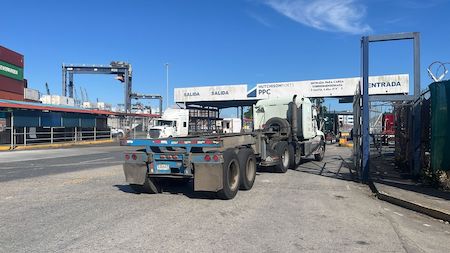
APM Terminals Resumes Container Reception at the Port of Balboa

APM Terminals Panamá reported that the stabilization phase of operations at the Port of Balboa, on Panama’s Pacific coast, is progressing according to plan. The process aims to ensure operational continuity with minimal impact after the company assumed temporary management of the terminal.
As part of the schedule, on February 24 the reception of export and empty containers via the gate resumed. Gate access remains open from 7:00 a.m. to 10:00 p.m. For the time being, import containers are not being released.
The company indicated that all refrigerated containers carrying perishable goods remain connected to power and under constant monitoring to preserve the cold chain.
APM Terminals also noted that personnel continue advancing in training on the new operating system to ensure a smooth transition in data and cargo management.
Bianca Morán, from the Panamanian Association of Exporters and exporter at Ecotopía, explained that since yesterday several members have been unable to retrieve empty containers at the Port of Balboa, causing delays during peak fruit export season. “We have members who have all their empty containers reserved in Balboa and have not been able to collect them. The Port of Manzanillo has been very supportive, and we are moving cargo there, but not all routes depart from Colón,” she stated. Morán said they expect the situation to normalize within 48 hours and expressed confidence that APM Terminals can resolve the issue within that timeframe, although she warned that the sector had already been experiencing accumulated delays.
She explained that retrieving “empties” refers to collecting containers without cargo that had already been reserved—particularly refrigerated units intended for exports such as pineapple or watermelon, which require confirmed vessel space and strict cold-chain maintenance. She also indicated that those needing to retrieve loaded containers have likewise been unable to do so. “The port operates 24/7 and the government does not,” she added, calling on public institutions to assign additional staff over the weekend to prevent further disruption to exporters.
President of the Spanish Senate Expresses Support for Panama Regarding the European Union Tax List

The President of the Spanish Senate, Pedro Rollán Ojeda, visited Panama’s Asamblea Nacional de Panamá this Tuesday, where he met with Panamanian lawmakers and addressed, among other issues, the country’s continued presence on the European Union’s list of tax havens.
Rollán Ojeda was accompanied by Spanish senators who are part of the official delegation. During the meeting, matters of bilateral interest were discussed, including an invitation for Panama to participate in the upcoming Ibero-American Summit of Heads of State and Government to be held in Spain next November.
They also discussed the interest of Spanish companies in investing in Panama and strengthening economic ties between the two countries.
When asked about Panama’s continued inclusion on the European Union list and Spain’s 2023 decision to remove the country from its own list of tax havens, the Senate President stated that Spain had been on the right side of the issue and expressed confidence that Panama’s removal from the European list could materialize soon.
“The enormous effort made by the Panamanian government to leave behind certain past tax treatments associated with transparency should not be overlooked. Spain is working and will continue working so that Panama is recognized as a full-fledged country with explicit acknowledgment of sharing the highest standards of transparency and taxation. I can assure you that sooner rather than later this will happen, and it will not only be the result of friendship, but of the work you are carrying out in your country,” he said.
Later, Rollán Ojeda addressed the plenary session of the National Assembly, where he reiterated the importance of the Ibero-American meeting scheduled for November in Spain and expressed his hope that Panamanian lawmakers would be able to participate.
Summons Fails
Meanwhile, the plenary continued with its regular agenda. During the session, Congresswoman Yamireliz Chong, from the Vamos party, attempted to promote a summons for the administrator of the Autoridad Marítima de Panamá, Luis Roquebert. However, the proposal did not move forward due to a lack of quorum.
To approve the summons, 36 lawmakers were required to be present, but only 24 were in the chamber. The vote recorded 23 in favor and one against, cast by Luis Eduardo Camacho of the Realizando Metas party.
The session highlighted both international support for Panama on tax matters and the internal dynamics of legislative debate.
Minsa Explains What Zoonoses Are and How to Prevent These Diseases in Panama

The Ministerio de Salud de Panamá (Minsa), through its National Directorate of Food Control and Veterinary Surveillance (DNCAVV), explained to the public what zoonoses are, how they are transmitted, and the main measures to prevent these diseases.
Authorities emphasized that ongoing surveillance and public responsibility are essential to maintaining Panama in a stable epidemiological situation.
The Deputy Director of the DNCAVV, veterinary doctor Filiberto Frago, stated that zoonosis refers to any disease that can be transmitted from animals to humans.
How These Diseases Are Transmitted
According to the specialist, these infections can be caused by:
- Bacteria
- Viruses
- Fungi
- Parasites
Transmission can occur through:
- Direct contact with infected animals
- Consumption of contaminated food
- Exposure to contaminated water or soil
- Bites from vectors and insects
Most Common Zoonoses in Panama
The official indicated that the most common zoonotic diseases in Panama include:
- Leptospirosis
- Hantavirus
- Brucellosis
- Screwworm
- Rabies
Regarding rabies, authorities recalled that it is a vaccine-preventable disease in dogs and cats and highlighted that no human rabies cases have been reported in the country for decades, thanks to sustained vaccination campaigns.
They also reiterated that pet owners are responsible for keeping their animals’ vaccinations up to date.
Joint Efforts for Health Surveillance
Minsa carries out coordinated actions with the Ministerio de Desarrollo Agropecuario de Panamá (MIDA) and international organizations such as the Organización Panamericana de la Salud (PAHO) and the Organismo Internacional Regional de Sanidad Agropecuaria (OIRSA).
These actions are implemented under the “One Health” approach, which recognizes the connection between human, animal, and environmental health.
Minsa’s Recommendations to the Public
The institution reiterated several preventive measures to reduce the risk of infection:
- Wash hands with soap and water after handling animals or food
- Keep pets’ vaccination schedules up to date
- Avoid contact with wild animals
- Preserve food properly and maintain the cold chain
- Thoroughly wash fruits and vegetables before consumption
- Visit the nearest health center if experiencing symptoms such as fever, muscle pain, diarrhea, or respiratory difficulty
Dr. Frago emphasized that Panama remains in a stable phase regarding zoonotic disease transmission, the result of interinstitutional coordination and constant monitoring. However, he stressed that prevention begins at home through responsible practices that protect the health of the entire community.
Bill No. 374: Key Points of the Reform That Opened the Door to Reviewing Final Judgments in Panama

The initiative sought to amend the Criminal Procedure Code to create a new mechanism for reviewing final convictions.
Bill No. 374, introduced by Congressman Jamis Acosta Guerra, proposed amendments to the Judicial Code and the Criminal Procedure Code to allow convicted sentences to be reviewed when violations of fundamental rights and due process are alleged.
The bill was discussed on Wednesday, February 25, in the Government Committee of the Asamblea Nacional de Panamá; however, after a heated debate, it did not pass its first reading.
The initiative, promoted by the ruling party Realizando Metas (RM), sought to equalize the right to appeal convictions in cases processed under the inquisitorial system.
Key Points of the Bill
1. What exactly would it amend?
The proposal aimed to reform two core provisions of Panama’s criminal justice framework:
- Article 2030 (listed as 2430 in the bill’s text) of Book III of the Judicial Code
- Article 191 of the Criminal Procedure Code
The objective was to expressly include, as grounds for appeal, the possibility of challenging convictions when constitutional rights, international treaties ratified by Panama, or due process guarantees had been violated.
2. The New Ground for Cassation
The bill proposed adding a new subsection allowing a Cassation Appeal when:
“Interests, rights, or guarantees established in the Political Constitution or in international treaties ratified by Panama have been infringed; likewise, when due process guarantees have been violated.”
This would have broadened the grounds for reviewing rulings issued by Superior District Courts in cases involving crimes punishable by more than two years in prison.
3. Review of Final Judgments
The most sensitive change concerned Article 191 of the Criminal Procedure Code.
A new ground would have been incorporated allowing the review of final judgments “at any time and solely in favor of the convicted person” when criminal or procedural rights recognized in the Constitution, international treaties, or statutory law had been violated.
This means that even fully executed and final convictions could have been reexamined if a substantial violation of fundamental rights were demonstrated.
4. The Core Argument: “Equality Before the Law”
The statement of purpose argues that there is procedural inequality between individuals tried under the former inquisitorial system (Book III of the Judicial Code) and those prosecuted under the accusatory criminal system.
According to the explanatory memorandum, the bill sought to “create equality of treatment before the law” and guarantee “effective judicial protection.”
5. The Controversial Point
Although the text frames the reform in terms of procedural equality and fundamental rights, political sectors have interpreted the proposal as potentially opening the door to reviewing high-profile convictions issued under the previous system.
The bill has not been approved or enacted into law. It remains pending first debate after being returned by the Government Committee.
What Is at Stake?
If the initiative advances, Panama would incorporate a broader avenue for reviewing convictions when constitutional or treaty-based violations are alleged.
If it fails, the procedural differences between judicial systems—described by the bill’s sponsor as a “structural asymmetry”—will remain in place.
New Metropolitan Park in David, Chiriquí Inaugurated

The Metropolitan Park of David was inaugurated in the province of Chiriquí, in the presence of First Lady Maricel de Mulino and the Mayor of David, Joaquín De León, along with national and regional authorities.
This space belongs to the community and plays a key role as a gathering point for recreation and family activities. Its strengthening requires planning, interinstitutional coordination, and sustained commitment to restore the dynamism and visibility it deserves.
Office of the First Lady
The Board of Directors of the Metropolitan Park of David is beginning a new phase of coordinated work focused on the renewal, strengthening, and long-term development of this emblematic space for the people of Chiriquí.
Autoridad Nacional de Aduanas Responds to Statement from Venezuela Regarding Diplomatic Pouch at Aeropuerto Internacional de Tocumen

The Autoridad Nacional de Aduanas issued an official statement in response to declarations by the Foreign Ministry of the Venezuela, which alleged the forced opening of a Venezuelan diplomatic pouch at Aeropuerto Internacional de Tocumen.
Customs authorities clarified that all actions taken during the procedure were carried out “in accordance with national regulations and current international agreements,” with the aim of protecting national territory and the security of its inhabitants.
The incident occurred when a representative of the Venezuelan government arrived in Panama and presented four pieces of luggage at the scanner area. Two of them displayed irregular images that required additional verification. Upon being informed of the inspection, the official stated that the items were diplomatic pouches. The National Customs Authority immediately coordinated with the Ministerio de Relaciones Exteriores de Panamá to proceed with the process.
Following the corresponding inspection, Panama’s Foreign Ministry determined that the packages did not meet the requirements established under Article 27 of the Convención de Viena sobre Relaciones Diplomáticas, an international treaty that requires visible external markings, official seals, and other elements ensuring inviolability for a shipment to be considered a diplomatic pouch.
Túnel del Toyo in Colombia: Latin America’s Longest Mega-Project Set to Become Reality in 2026

With a length of 9.7 kilometers, the Túnel del Toyo is consolidating its position as the longest tunnel in Latin America, surpassing projects such as the Túnel de La Línea, which connects the departments of Quindío and Tolima. The project promises to reduce travel time to the Urabá region of Antioquia to just four hours.
Located in the Western mountain range between the municipalities of Cañasgordas and Giraldo, the project has reached more than 99% completion on its main section. This Colombian engineering mega-project stands out not only for its length but also for the system of 18 tunnels and 30 bridges that make up the entire highway corridor, designed to handle heavy cargo traffic heading toward new Caribbean ports.
The completion of the tunnel lining and the installation of intelligent ventilation systems have been key milestones this year. According to the schedule set by Instituto Nacional de Vías (Invías) and the Gobernación de Antioquia, the project is expected to be fully operational between late 2026 and early 2027, eliminating the need to travel along winding and hazardous routes that currently slow down trade.
Economic Impact of Colombia’s Longest Tunnel
Once operational, this infrastructure will significantly boost Colombia’s economy by shortening strategic routes by up to 25 kilometers. The main projected benefits for the logistics and tourism sectors include:
- Medellín–Urabá connection: Travel time will decrease from approximately seven hours to about 4.5 hours.
- Port access: It will facilitate cargo transportation to Puerto Antioquia and Puerto Pisisi.
- Cost reduction: Lower fuel consumption and reduced vehicle wear and tear for freight transport.
Equipped with advanced technology for gas monitoring and road safety, this smart tunnel positions Colombia as a regional leader in underground infrastructure. South American engineering is nearing completion of a landmark project that will mark a turning point in continental connectivity.
The Mikkelson Files: #2 – The Case of the Madderdahdy