Friday, September 19, 2025.
COMICCON Panama
For the last few years, my boys have been pestering me to let them dress up in costumes and spend the weekend getting candy and toys. No, it’s not Halloween, it’s COMICCON!!! That’s right, they are absolutely hooked on COMICCON, and this year it’s coming up on us fast being the 19–21 of September.
COMICCON isn’t Halloween, but one may say that it’s sort of like a combination of Halloween and Oktoberfest, minus the hangovers and bratwurst. Instead of vampires and superheroes roaming the streets, you’ll find Stormtroopers standing in line for hot dogs, Pikachus taking selfies, and at least three versions of Spider-Man comparing web-slinging poses.
Of course, with thousands of people in one place, ComicCon is also a security director’s version of a “Where’s Waldo?” puzzle. You’ve got Darth Vader trying to get through metal detectors with a lightsaber, Deadpools sneaking candy into the venue like it’s contraband, and a couple of suspiciously realistic stormtroopers who make you wonder if they’re guarding the Death Star or the snack bar.
Every year I catch myself doing mental “threat assessments” while the boys are just doing costume assessments. They’re deciding which Iron Man suit looks coolest; I’m watching crowd flow and exit routes. They’re chasing toys; I’m counting how many Batmans it would take to hold the line if things got rowdy.
But at the end of the day, ComicCon is one of those events that reminds me of why we love what we do. Whether you’re in costume or in plain clothes, everyone’s there to celebrate creativity, stories, and a little bit of organized chaos. And sometimes, the best security plan is simply to join in the fun… just so long as nobody talks me into being Chewbacca again.
Brett Mikkelson
Director, B.M. Investigations, Inc.
TOP NEWS and TIDBITS:
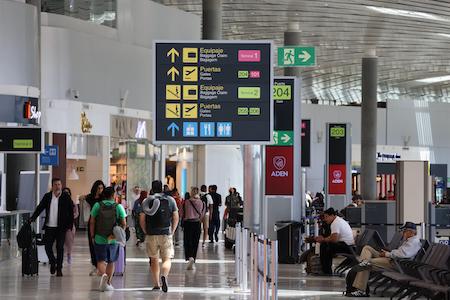
Panama Airport Surpasses 13.7 Million Passengers Through August

The Tocumen International Airport, Panama’s main gateway and a regional benchmark in air connectivity, recorded a total of 13,773,580 passengers during the first eight months of the year, representing an 8% increase compared to the same period in 2024, equivalent to more than 1,006,497 additional travelers.
According to the airport, in August 2025, total passenger traffic reached 1,851,451, with a daily average of 59,724 movements, with Thursdays, Fridays, Sundays, and Mondays being the busiest days. Of this monthly total, 74% were transit or transfer passengers, amounting to 1,365,912 travelers.
Regarding visitors entering Panama, 1,882,031 passengers disembarked between January and August, reflecting a 4% increase compared to the same period last year, or 71,854 additional travelers. Meanwhile, passengers departing to international destinations totaled 1,925,779, a level virtually unchanged from 2024 (-529).
Air traffic also maintained a positive dynamic. Between January and August, 109,260 flight operations were recorded, representing an 8% increase (7,864 more flights). In August alone, 14,279 operations were registered, 10% more than in the same month of 2024, with a daily average of 413 flights. The monthly breakdown shows that 90% were commercial flights, 7% cargo, 2% general aviation, and 1% special flights such as charter, military, or technical.
Currently, Tocumen operates with 15 passenger airlines and 15 cargo airlines, connecting to 86 international destinations in the Americas, Europe, and the Caribbean, reaffirming its position as a strategic regional hub.
The top five origin and destination cities in August were led by Bogotá (698,487 passengers), followed by San José (618,552), Miami (602,118), Medellín (578,026), and Punta Cana (529,115).
Air cargo also showed outstanding performance. Between January and August, 159,233 metric tons were transported, a 16% increase compared to the same period in 2024 (21,696 additional tons). In August alone, the volume reached 20,958 metric tons, also reflecting 15% growth.
For Tocumen International Airport’s General Manager, Jose Ruiz Blanco, these figures reaffirm the terminal’s strength as a driver of tourism and the Panamanian economy:
“Tocumen is not only the main gateway to Latin America; it is also a symbol of Panama’s commitment to innovation, connectivity, and service excellence. These results reflect the trust of millions of passengers and airlines that choose us every day, consolidating our role as a world-class regional hub.”
Metro Line 3: President Mulino Details Tunnel Progress and Promises to Complete It During His Term

The President of the Republic, José Raúl Mulino, highlighted the progress in the construction of the Panama Metro as the one-year anniversary of the Panama Tunnel Boring Machine (TBM) operation was marked.
“Exactly one year ago, we put the Panama TBM into operation and reached the maximum depth, and now we are rising to connect Farfán with Albrook. Believe me, it has been a real feat,” Mulino stated.
The President also criticized changes made to the original project, which had planned a combined bridge for vehicles and the Metro. He noted that it was ultimately split into a bridge for vehicles and a tunnel for the Metro, but “in the end, they did neither one nor the other.”
Mulino emphasized the complexity and challenges overcome during the project, which aims to improve connectivity and mobility in the city.
The Clear Channel in the Pacific: Canal Seeks Solution Amid Construction of New Ports

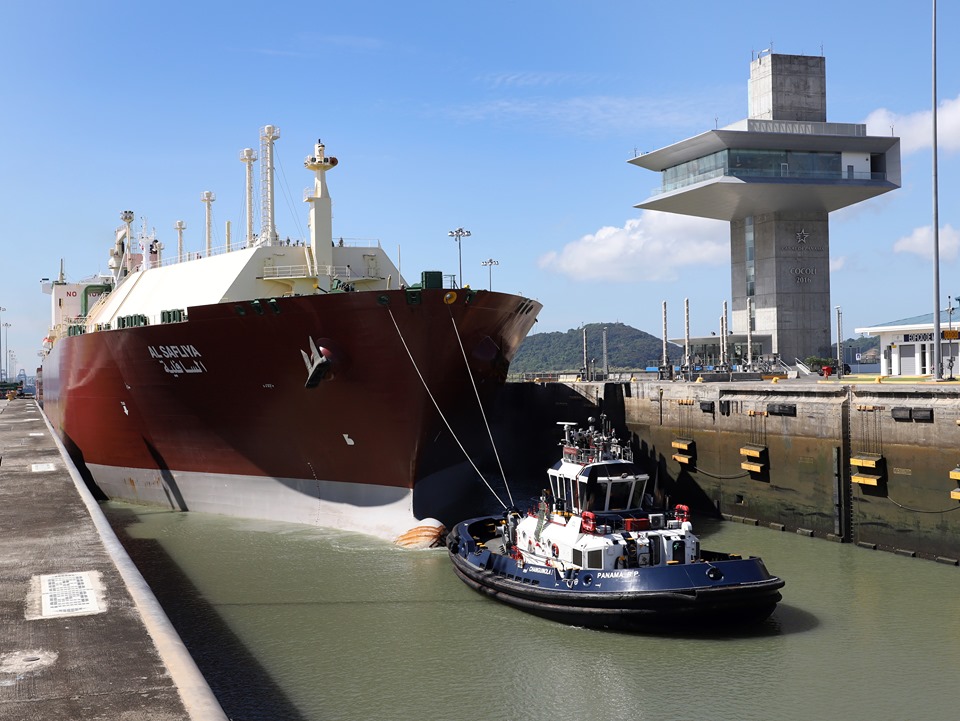
In the Pacific side of the Panama Canal, there is a condition that acts as a restriction for ships wanting to enter or exit the ports along the shore. They cannot do so while a vessel is passing through the canal in either direction, and some ships have to wait for hours.
With the arrival of a new port in the area, the Canal administration needs to find a solution.
In a press conference held on Tuesday, September 16, Canal administrator Ricaurte Catín Vásquez responded to SNIP Noticias regarding this condition, known as the clear channel.
“In managing Canal operations, we will assess the benefits of having a terminal owned by the Panama Canal. It is now essential that the Panama Canal, in its traffic management process, give higher priority to terminal operations,” he said.
He explained that even without directly operating a terminal, the institution must optimize the existing capacity. In this context, he mentioned the CICO project (Integrated Operations Control Center), which seeks to integrate all operations and resources in the Canal’s waters.
He noted that this center is not only a physical infrastructure but also a conceptual one, because it allows the Canal to incorporate everything that happens in its waters into its planning. “The mere fact that the Panama Canal opens its portal, its concepts, and its slot availability to the knowledge of the end client greatly strengthens the trust the client has that this can be done,” he explained.
Vásquez emphasized that, although structural barriers still exist, the need for transparency is leading the Canal to become more open with its clients. “At the Panama Canal, we are always willing to listen. Not everything requested is feasible, but we are willing to listen. Just as we listen during droughts, we can do the same for the client,” he concluded.
Will Gasoline Prices in Panama Go Up or Down? Fuel Price Change Coming This Week

Fuel prices in Panama will undergo a new update this week, as drivers remain attentive to announcements from the National Energy Secretariat (SNE).
Since Friday, September 5, 2025, an increase was applied to the maximum retail price of fuels, effective until Thursday, September 18.
Current fuel prices in Panama:
- 95-octane gasoline: B/.3.53
- 91-octane gasoline: B/.3.38
- Diesel: B/.3.14
Authorities emphasize that these adjustments respond to fluctuations in the international market and reaffirm their commitment to exploring alternatives to reduce dependence on fossil fuels. Drivers should stay alert for the next update, which will determine whether prices will continue to decrease or if an upward adjustment will occur.
Ministry of Economy and Finance Files Complaint Over Hacking; Documents Were Stolen

The Ministry of Economy and Finance of Panama filed a complaint after its security was breached on Tuesday, September 9.
Felipe Chapman, Minister of the MEF, told SNIP Noticias that the information extracted consisted of some documents from the Legal Advisory Department, “which for practical purposes are public and not significant. The crime was penetrating the system; there is no material consequence from the information obtained,” said the minister.
He indicated that the perpetrators of the system breach have not yet been identified.
The official denied that any taxpayer data was affected.
On the day of the incident, the MEF reported detecting a possible malware attack on one of its workstations. According to the institution, security protocols were activated immediately, and preventive measures were reinforced across the entire IT system.
The MEF assured that “none of the Ministry’s central systems and platforms have been compromised and continue to operate normally.” It added that its technical team maintains constant monitoring to protect information and continuously strengthen cybersecurity measures.
Panama and Colombia Make Progress on the Update of the Binational Electric Interconnection Project

This Thursday, Panama and Colombia met to review progress, challenges, and prospects of the electric interconnection project. The meeting, held at the headquarters of the Latin American and Caribbean Parliament, was attended by ministers, regulatory authorities, and multilateral organizations.
Juan Carlos Orillac, Panama’s Minister of the Presidency, stated that Panama reiterates its strong commitment to the electric interconnection with the sister republic of Colombia. “We know this represents a significant economic and technical effort, with an important investment that will provide our countries with energy security, supply stability, and new opportunities for regional competitiveness,” he said.
Meanwhile, Rodrigo Rodríguez, Panama’s National Secretary of Energy, noted that this project has been discussed for over 20 years, but it is under the current administration that tangible progress is being made, with both countries working together.
On his part, Edwin Palma, Colombia’s Minister of Mines and Energy, highlighted that this project is not just about energy: “It is regional integration, social development, and security for our peoples.”
Also participating were Oscar Vallarino, Panama’s Vice Minister of Environment, and Irene Vélez, Colombia’s Minister of Environment and Sustainable Development, who emphasized the importance of sustainability and environmental protection in the project.
The agenda included technical presentations from international organizations such as the Inter-American Development Bank and the Andean Development Corporation, as well as a report on the current status of the project by Interconexión Colombia–Panamá, presented by its General Manager, Jorge Jaramillo.
During discussions on regulatory matters, the National Authority of Public Services (Panama) and the Energy and Gas Regulation Commission (Colombia) exchanged views on regulatory frameworks and mechanisms necessary to ensure the technical and economic viability of the interconnection.
The closing remarks were made by Colombia’s Minister of Energy, who underscored the project’s importance as a key step toward the consolidation of a regional electricity market. “With the political will that both countries maintain, we hope this major project will be completed before the end of President Gustavo Petro’s term. The interconnection is a binational decision; advancing with reciprocity, transparency, and a joint monitoring mechanism is the objective,” he stated.
The next meeting on the project is scheduled for October of this year.
November Will Be Decisive for Panama: Moody’s to Decide the Rating at Its Sovereign Committee

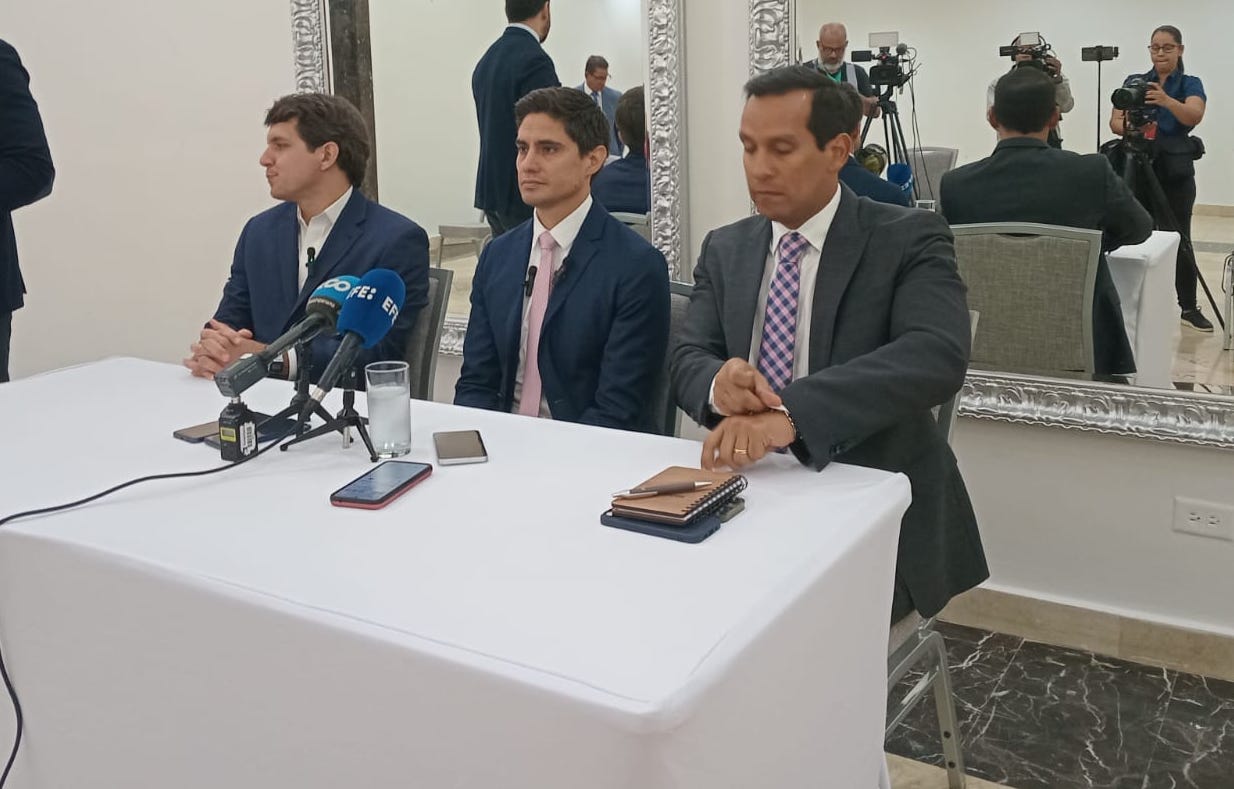
A few months ago, Renzo Merino, Moody’s lead analyst for Panama, told SNIP Noticias that most of the calls he received from investors were about Panama, highlighting the focus on the canal country. That attention continues.
“I cover not only Panama, but also countries like Colombia and Mexico. And obviously, Mexico is a very large and important country in global financial markets in terms of emerging markets. I receive as many calls about Mexico as about Panama. So yes, Panama is today a very important credit in my portfolio and in investors’ view,” he said during a press conference last Tuesday following his participation in the Inside LatAm: Panama 2025 event organized by the rating agency in Panama City.
Moody’s will hold its sovereign committee “no later than November”, where it will evaluate Panama’s credit rating. The agency will scrutinize third-quarter fiscal results, the 2026 budget debate and assumptions, legal and administrative measures for fiscal consolidation, and the evolution of contingent liabilities, such as the mining case.
Merino clarified that this is not a decision he makes alone: “Credit rating decisions are made in the context of a sovereign committee. I am a member of the committee,” he explained, adding that analysts from other countries and regions participate at different levels of the rating scale. “This committee is scheduled no later than November of this year. The outcome of the committee could vary significantly.”
Panama has remained at the lowest investment-grade level since November 2024, when its debt was rated Baa3 with a negative outlook. Since then, there has been progress, but Moody’s warns it is not enough: “So far, it is not sufficient to truly consolidate the trajectory of a lower fiscal deficit and stabilize the numbers.”
“Typically, at Moody’s, when we have a negative outlook, we see a one-in-three probability of a downgrade,” Merino noted.
From now until November, the budget discussion and third-quarter data will be “very important” to inform the decision, along with concrete steps to strengthen deficit correction and the State’s revenue capacity. The agency expects signs that the adjustment is credible and sustainable.
Beyond the fiscal front, Merino reiterated the existence of another “institutional deficit” that affects confidence and financing costs. He emphasized the need for greater predictability and rule compliance, as well as improvements in rule of law and corruption control.
Regarding broader internal and external pressures, he noted that this year competing priorities have emerged: “Other issues have arisen this year. With the change of government in the United States… the relationship of the U.S. with Panama, China, and the role of the Canal, etc.” Addressing these matters, he said, has led to “putting aside other issues that might be more relevant from a credit perspective,” situating these tensions in a context of “high uncertainty over tariff issues,” with potential effects on transport and logistics.
The outcome of Moody’s committee could maintain the rating and outlook, change the outlook, or result in a rating adjustment. The path set by the budget, fiscal execution, and management of contingencies in the coming weeks will be decisive.
For its part, the Ministry of Economy and Finance (MEF) issued a statement indicating that it has taken measures to protect Panama’s investment grade.
“Panama organizes its finances in compliance with the Fiscal Social Responsibility Law approved in October 2024. This reform sets an explicit and declining deficit path from 4.0% of GDP in 2025 to 1.5% by 2030, ensuring a clear trajectory of sustainability,” the statement said.
They added that the law provides a clear route: reducing the deficit year by year. Through this strategy, the country works to pay less interest, protect social spending, and maintain credibility.
In November 2024, Moody’s maintained Panama’s rating but with a negative outlook.
The MEF indicated that since that date, the following actions have been implemented:
- Fiscal rule in force: Following the law’s path to spend with discipline and prioritize essential items.
- Pension reform (CSS): Approved in March 2025 to ensure system sustainability and greater transparency.
- Better expenditure control: Cuts to administrative expenses and focus on programs that improve human development, protecting the most vulnerable—health, water, education, security, among others.
- Healthier finances: Participation of the local market through Treasury bill auctions and diversification of financing sources.
- Transparency: Progress with verifiable data.
“Panama is doing its homework with a clear fiscal law, stabilizing public debt growth, approved pension reform, and responsible execution to protect its investment grade,” the MEF concluded.