Friday, September 4, 2026.
Puerto Rico: An Island With an Identity All Its Own
Puerto Rico is one of those places that has always fascinated me, not only because of its beauty, culture, and people, but because of the rather unique position it occupies in our hemisphere.
My own experiences with Puerto Rico go back to the 1990s, during a period when the U.S. military presence in Panama was beginning to change dramatically. As the 470th Military Intelligence Brigade began packing things up and elements of the U.S. Southern Command presence were being relocated, Roosevelt Roads Naval Station, on the eastern side of Puerto Rico, became part of that changing landscape. I was actually given the opportunity to relocate to Puerto Rico and continue working there. As attractive as the idea was, the economics simply didn’t make sense for my family at the salary being offered, and ultimately we decided against it.
Nevertheless, I traveled to Puerto Rico on a number of occasions and always found it to be a wondrous place. It is a beautiful island with beautiful people, a tremendous sense of culture and history, and an identity that is very much its own.
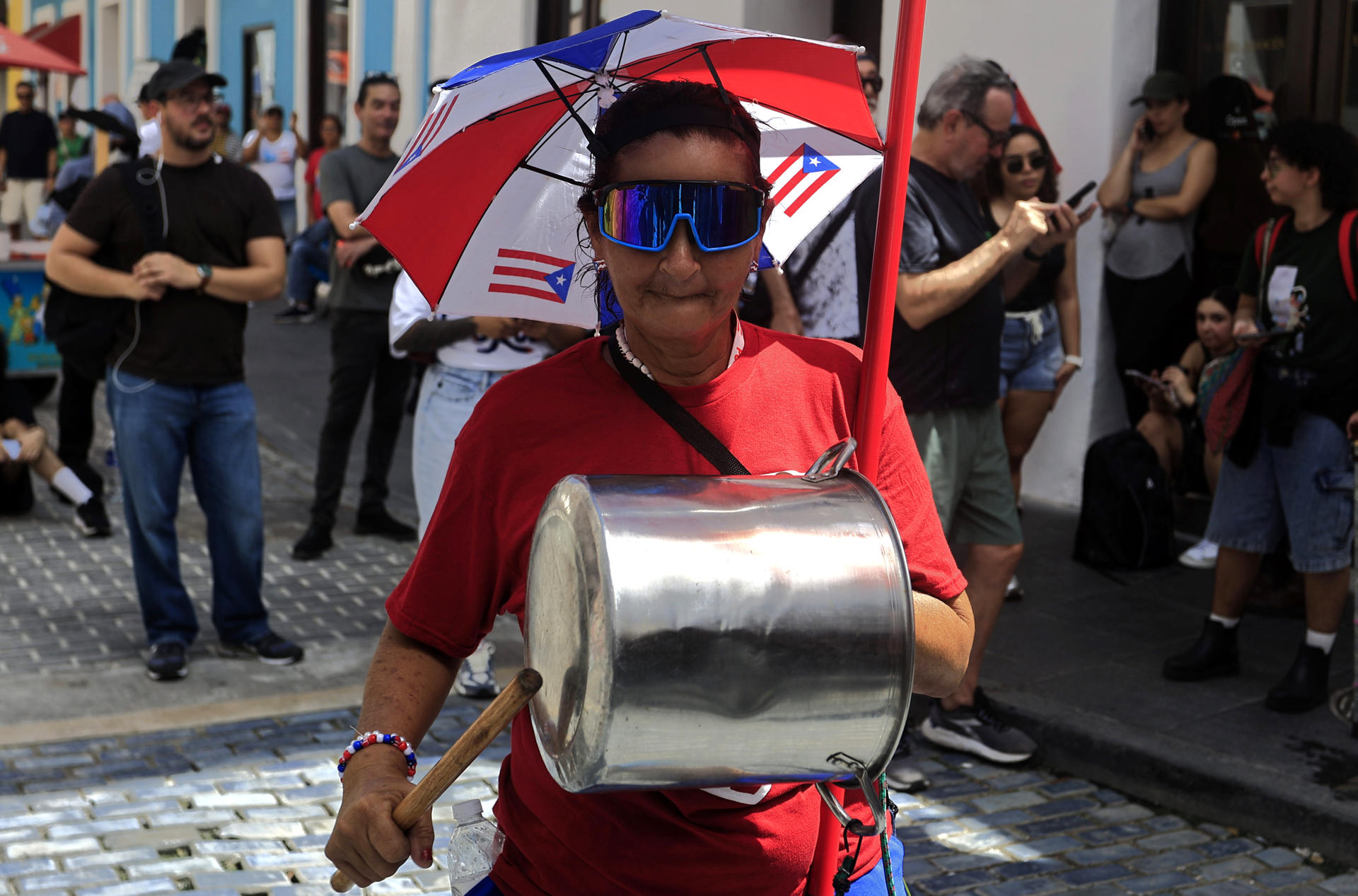
Its political identity, however, has always made Puerto Rico particularly interesting. It is not an independent country, but an unincorporated territory of the United States whose residents are U.S. citizens. It has its own constitution, elected government, traditions, symbols, and, yes, its own very recognizable flag. Yet Puerto Ricans living on the island do not vote for President in the general election and their representative in Congress, the Resident Commissioner, does not have a vote on final passage of legislation on the House floor.
Years ago, while working with colleagues in the National Imagery and Mapping Agency, we used to joke about whether Puerto Rico could really be called a “country” and what that meant for things such as maps, flags, and national identity. The humor reflected a much more complicated reality: Puerto Rico doesn’t fit neatly into many of the categories we normally use to describe the nations and territories of our region.
Geographically, Puerto Rico sits squarely in the Caribbean. Culturally and linguistically, its connections to Latin America and the broader Hispanic world are unmistakable. Politically and economically, however, its relationship with the United States has shaped much of its modern history. Questions of statehood, independence, and the continuation or modification of its current territorial status remain part of an ongoing political conversation.
Perhaps that is what makes Puerto Rico so fascinating. It is American, Caribbean, Latin American, and distinctly Puerto Rican all at once. And anyone who has spent time there quickly realizes that its identity cannot really be explained by looking at a political map alone.
This week, we turn our attention to Puerto Rico—not simply as a beautiful Caribbean island, but as a place whose geography, history, politics, security environment, and people have given it a character unlike anywhere else in our region.
Brett Mikkelson
Founder, B.M. Investigations, Inc. – Private Investigations in Panama
Dolly Brings Slight Relief: Extreme Drought Eases in Puerto Rico

Recent rainfall provided some relief to several of the areas most affected by drought in Puerto Rico, reducing the extent of the extreme drought category, although 82.91% of the territory remains under some level of dryness or drought.
According to the latest report from the U.S. Drought Monitor, extreme drought (D3) now covers 40.99% of the territory, down from the 44.45% reported last week. The reduction amounts to 3.46 percentage points.
The Drought Monitor attributed the improvement to rainfall recorded over the past several days, particularly from the passage of the remnants of former Tropical Storm Dolly.
According to the weekly summary, some areas in the southeast received more than 15 centimeters of rainfall, while much of the eastern region accumulated between 5 and 7.5 centimeters.
As a result, areas in the northeast and southeast that had been under extreme drought improved to severe drought (D2). Likewise, in a small portion of the southeast, conditions improved from severe drought to moderate drought (D1).
Despite the improvement, extreme drought remains the most widespread classification in Puerto Rico, with large areas of the south, east, and northeast still under this category.
Municipalities that appear entirely within the extreme drought zone include San Juan, Trujillo Alto, Carolina, Canóvanas, Loíza, Humacao, Juncos, Las Piedras, Gurabo, Lajas, Guánica, Peñuelas, Juana Díaz, Villalba, Coamo, Santa Isabel, and Aibonito.
The D3 classification can result in crop losses, shortages of feed for livestock, deterioration in water quality, and declining groundwater levels. It can also disrupt daily routines and, in more severe scenarios, lead to changes in school schedules or business closures.
Meanwhile, severe drought (D2) now covers 21.27% of the territory, a decrease from 22.16% last week. The difference represents 0.89 percentage points.
Under this classification, the agricultural sector may face planting delays and hay shortages, while livestock producers may be required to supplement their animals’ feed. Signs of stress in trees and plants may also be observed, along with stricter water conservation measures.
Meanwhile, the portion of the territory under moderate drought (D1) increased from 8.60% to 12.95%, a difference of 4.35 percentage points.
This increase does not necessarily represent a deterioration in conditions, as part of the expansion of this category reflects areas that were previously under more severe drought levels and improved following the recent rainfall.
Moderate drought can cause crop stress, increase the risk of wildfires, and lead to declining water levels in reservoirs, lakes, rivers, and streams.
On the other hand, 7.70% of the territory remains abnormally dry (D0), unchanged from last week’s report. In Puerto Rico, this classification may reflect river and stream flows below their usual levels.
Although the total area under some category of dryness or drought remains at 82.91%, the data show a reduction in the intensity of conditions in some areas of the island following the rainfall of the past several days.
New York Sends First Shipment of Drinking Water to Puerto Rico

The governor of New York announced that the first shipment will be sent by air this Saturday, with approximately 1,900 boxes containing 45,000 individual bottles of drinking water.
The aid comes as the federal government declared a drought disaster in 26 of the island’s 78 municipalities.
“When our family needs help, we respond. For months, the severe water shortage has forced authorities to declare a disaster and a state of emergency. People have had to ration water and even go without it for periods of time, posing serious health risks to those living on the island,” said Kathy Hochul, Governor of New York.
The Afya Foundation, the main organization behind this initiative, provides humanitarian assistance by collecting and donating medical materials and supplies to communities in crisis.
Its director of special projects told us that a second shipment will depart by ship on Monday, August 31, carrying approximately 40,000 bottles of water.
“There are areas in Puerto Rico, such as Loíza, in the west, that have no water, and people are going 48 to 72 hours without water in their homes. They need water to cook, they need water to drink, for the most essential things,” said Milagros Gutiérrez, director of special projects at Afya.
The initiative brings together the support of local officials, community members, and approximately 20 charitable organizations.
“I am very happy because, thank God, we will be able to bring the water, and on the other hand, I can go and purchase water there on the island to distribute it through different organizations,” Gutiérrez added.
“I am very happy because, thank God, we will be able to bring the water, and on the other hand, I can go and purchase water there on the island to distribute it through different organizations,” Gutiérrez added.
Nearly half a million residents continue to be affected by the drought and deteriorating water infrastructure. July was the driest month for San Juan in more than 120 years of recorded history.
More than 33 percent of Puerto Rico is experiencing extreme drought, while another 30 percent is experiencing severe drought.
In addition, more than 180,000 customers remain without water for up to 48 hours due to the measures.
Puerto Rico Groups Demand the Removal of Fiscal Oversight Board Imposed 10 Years Ago

Dozens of citizens representing various groups demonstrated in 11 municipalities across Puerto Rico, demanding the removal of the Financial Oversight and Management Board (FOMB), which marks 10 years today since it was imposed by the United States to restructure Puerto Rico’s local debt and control its public finances.
Carrying various signs reading “Out with the Colonial Board. No to the PROMESA Act!” and “Without labor justice, there is no future for Puerto Rico. Out with the Board,” the demonstrators gathered in 14 locations across the island to voice their demands and opposition to the entity, according to a press release.
“Ten years is too long, and we are fed up with the Board on every corner of the country. A decade later, people pay more for electricity, more for water, more for everything, and for the worst service, because all the money goes to the bondholders,” said Emilio Nievez, spokesperson for the Puerto Rican Workers’ Central, in the statement.
“The Board was imposed supposedly to resolve a crisis, but what it did was make it worse while they and their friends profit. We are taking to the streets as a call to unite in demanding its removal,” Nievez emphasized.
The FOMB was created by the U.S. Congress under the PROMESA Act to restructure Puerto Rico’s debt, which amounted to $70 billion, and oversee its public finances.
As of today, the only remaining agreement to be reached concerns the state-owned Puerto Rico Electric Power Authority (PREPA).
Meanwhile, Julio López Varona of the Citizens’ Commission for the Audit of Public Credit stated that the FOMB has only promoted “massive cuts to the public budget, without considering the harm they caused to the population, increased the cost of living and essential services, leaving the country in worse economic conditions without addressing the true roots of the crisis.”
Meanwhile, Cristian Martínez, executive director of Construyamos Otro Acuerdo, emphasized that the impact of the FOMB over these ten years has been felt particularly harshly by the country’s retired population.
“A dignified retirement is not a whim or a handout; it is a basic right that retired women earned by dedicating their lives to public service. It is time to take a first step toward allowing the people of Puerto Rico to govern themselves and fight for a country that puts our lives before the debt,” he emphasized.
In turn, Ángel Rodríguez León, co-president of the Hostosian National Movement, stated that the Board represents a deepening of the island’s colonial situation with the United States, under its status as a Commonwealth since 1952.
“Colonialism is incompatible with democracy, so these ten years of colonial dictatorship also mean the strengthening of mechanisms that deny the Puerto Rican people the ability to make decisions about fundamental aspects of our collective life,” he stated.
Rifles, Lasers and Night Vision: How Marines Deployed in Puerto Rico Train Amid Tensions with Cuba

U.S. Marines conducted nighttime training exercises with rifles, night-vision equipment, and laser devices at Camp Santiago, Puerto Rico, amid a military deployment that has drawn attention to Washington’s activities in the Caribbean.
The exercises were conducted by members of Combat Logistics Battalion 8 and 3rd Battalion, 2nd Marine Regiment, both assigned to Littoral Combat Force-24, known by its English acronym LCF-24.
During the maneuvers, the Marines calibrated AN/PEQ-15 devices mounted on their weapons. These systems allow personnel to aim at and illuminate targets using lasers, particularly when used in conjunction with night-vision sights.
Official Department of Defense documentation places the training on August 18, 2026, at the Camp Santiago Joint Training Center. The images were published on August 31 by the Defense Visual Information Distribution Service. DVIDS confirmed the date, participating units, and equipment used.
A Force Deployed in the U.S. Southern Command Area of Responsibility
The presence of LCF-24 in Puerto Rico is not an isolated activity. The force is part of U.S. forces deployed within the area of responsibility of the U.S. Southern Command, which encompasses the Caribbean, Central America, and South America.
According to the official explanation, the Marines support the Joint Task Force–Western Hemisphere and participate in operations aimed at disrupting drug trafficking, deterring actors considered hostile, and protecting U.S. territory through a continuous presence.
Littoral Combat Force-24 is organized around the 24th Marine Expeditionary Unit and includes ground, air, and logistics components capable of operating from military installations or Navy vessels.
The concept of “littoral combat” is specifically designed for operations in coastal areas, islands, and maritime corridors. For that reason, its exercises include live-fire training, amphibious landings, evacuations, air operations, rapid raids, and coordination with other military branches.
The Same Unit Trained at Naval Station Guantánamo Bay
Attention surrounding these maneuvers has increased because LCF-24 had already conducted training in 2026 at Naval Station Guantánamo Bay, located at the eastern end of Cuba and under U.S. control.
On June 4, members of the unit practiced helicopter rope insertions from a UH-1Y Venom. The aircraft departed from the amphibious assault ship USS Fort Lauderdale and transported the Marines to Guantánamo, where they simulated a rapid entry into restricted coastal terrain.
At the same time, U.S. Army CH-47 Chinook helicopters conducted landing exercises on the deck of the USS Fort Lauderdale. Colonel Ryan Lynch, commander of LCF-24, said at the time that the maneuvers demonstrated the tactical options the unit could provide to Southern Command and its ability to respond rapidly to a regional contingency. The official report described simultaneous operations from the sea to Guantánamo.
Is There an Operation Directed Against Cuba?
Although the geographic proximity and previous training in Guantánamo have fueled speculation, Washington has not announced that the exercises at Camp Santiago are part of a military operation against the Cuban regime.
Information released by the U.S. military links the deployment primarily to combating drug trafficking, countering organizations designated as terrorist groups, regional deterrence, and the protection of the United States.
Operation Southern Spear, in which U.S. expeditionary forces have participated, integrates Marine Corps capabilities with other military branches and federal agencies to conduct actions against drug-trafficking networks within the Southern Command area of responsibility. The official description presents the mission as a counternarcotics and hemispheric security operation.
Therefore, the nighttime training confirms a high level of readiness and a sustained U.S. presence in the Caribbean, but by itself it does not constitute evidence that an intervention in Cuba is being prepared.
Puerto Rico Strengthens Its Strategic Value
Camp Santiago, located in Salinas, is one of Puerto Rico’s main military training centers. Its location allows personnel and equipment to be mobilized to different points in the Caribbean within relatively short periods of time.
The nighttime exercises are intended to ensure that military personnel can identify targets, move, and coordinate under low-visibility conditions. They also allow the Marines to verify the accuracy of laser devices before using them in more complex exercises.
The combination of ground training in Puerto Rico, amphibious operations in the Caribbean, and previous exercises in Guantánamo demonstrates that the United States continues to strengthen its ability to respond in the region.
For now, these activities are part of a declared hemispheric security deployment. However, the activity of a force prepared to respond “to any contingency” will continue to draw attention, particularly because it is taking place in a setting where Cuba occupies a strategic position.