Friday, March 13, 2026.
The Sacred Bond
Last weekend, someone very dear to the BM Investigations family took one of the most meaningful and transformative steps in life.
Yolanda Atencio—whose dedication, organization, and quiet discipline help bring order and clarity to our work each week, including the very bulletin you are reading—entered into marriage with Exiel Santos.
Throughout life we pursue many things: achievements, recognition, possessions, and ambitions that at the time seem urgent. Yet with the passage of time, we come to realize that the most important structures we build are not made of titles or material accomplishments, but of relationships—bonds that give direction, stability, and purpose to our lives.
Marriage is one of those exceptional bonds.
In its deepest sense, marriage is not simply the union of two people through affection, but the conscious decision to intertwine two lives along the same path. It is accepting that the future—whatever it may hold—will no longer be faced alone. It is the quiet promise that joys will be shared, burdens will be carried together, and that two people united can become stronger than either could ever be alone.
Such a commitment demands more than love; it demands character.
It requires patience when circumstances test us, humility when pride could divide us, and loyalty when the world encourages us to think only of ourselves. In this sense, marriage is not only a celebration of the present, but also an act of faith in the future.
Those of us who know Yolanda understand well the virtues she brings to this sacred union: integrity, loyalty, human warmth, and a deep sense of responsibility toward those around her. These are no small virtues. They are the true foundations upon which strong families and lasting homes are built.
For this reason, as Yolanda begins this new chapter of her life alongside her husband Exiel, we pause not only to congratulate her, but also to recognize something deeper: the birth of a new alliance, a shared destiny, and a home that will be built day by day through commitment, respect, and love.
Yolanda, for some time now you have been an essential part of the spirit and rhythm of this organization. For that reason, we dedicate this edition to you and to the new life you have begun.
May the years ahead strengthen the bond you have formed, may your home be filled with joy and peace, and may the path you now walk together be long, meaningful, and full of purpose.
Congratulations to you both.
Brett Mikkelson
Director, B.M. Investigations, Inc. – Private Investigations in Panama
Comic Spotlight: Don’t miss The Mikkelson Files: #4 –The Case of The Couch Conspiracy, featured at the end of this article.
TOP NEWS and TIDBITS:
Panama Canal Reservoirs Reach Historic Water Levels

The Panama Canal Authority reported that the reservoirs supplying the Panama Canal have reached historic levels for the month of March, ensuring stable operations for the interoceanic waterway that carries between 5% and 6% of global maritime trade.
The start of 2026 has been positive from a hydrological perspective. High water levels in Gatun Lake and Alajuela Lake—the two main reservoirs feeding the canal—have strengthened the system, according to Ayax Murillo, Hydrology Manager at the Panama Canal Authority, in an interview with the newspaper La Prensa.
“For the first time in recorded history, the water levels of Gatun and Alajuela reservoirs for the month of March are the highest ever registered in the hydrological history of the Panama Canal (…) Our water reserves are sufficiently robust to face the remainder of the 2026 dry season,” Murillo explained.
In terms of capacity, the Alajuela reservoir is operating at approximately 99% of its capacity, while Gatun exceeds 90%. These levels allow the canal to operate without restrictions and maintain the maximum permitted draft for vessels.
As of Monday, March 9, Gatun Lake recorded a water level of 88.32 feet (26.92 meters), close to its operational maximum of 88.93 feet (27.10 meters). Meanwhile, Alajuela Lake stood at 251.52 feet (76.66 meters), near its maximum operational level of 252 feet (76.81 meters).
Due to the recent rise in water levels, the canal has conducted several controlled water releases at the Gatun and Madden dams in November and again in February.
Currently, traffic through the Panama Canal averages between 38 and 40 vessel transits per day through the lock system.
Murillo also noted that February 2026 was the wettest February recorded in the canal’s more than 132 years of hydrological records, due to unusual rainfall in the watershed.
Water Consumption for Canal Operations
The canal’s operation depends on enormous volumes of freshwater. Each Panamax-type vessel that crosses the waterway uses approximately 200 million liters of water, released from the reservoirs during the lockage process.
With roughly 40 daily transits, the canal uses around 10 billion liters of water per day to move ships between the Atlantic and Pacific oceans.
Additional pressures also affect the water supply. Evaporation from the lakes can result in losses of 1.5 to 2 cubic hectometers per day, equivalent to roughly 2 billion liters of water daily, especially during the dry season when solar radiation and winds intensify.
Water Supply for the Population
Beyond maritime transit, the canal’s reservoirs also supply drinking water to a large portion of the country. Between eight and nine water treatment plants currently draw raw water from Gatun and Alajuela lakes.
New facilities are also planned, which will increase demand for freshwater resources. For that reason, authorities emphasize the importance of developing a new reservoir through the proposed Rio Indio dam project.
Potential Threat Beginning in May
Despite the current abundance of water, the canal continues implementing conservation measures while closely monitoring climate conditions.
Since December 2025, the canal has applied operational strategies that save more than one billion liters of water per day at the locks, preparing for the possible development of the climate phenomenon El Niño during the second half of 2026, which could bring drier conditions to the watershed.
Authorities warn that the most significant challenge could emerge during the 2027 dry season, when the effects of El Niño typically become more pronounced and rainfall in the canal basin may decrease.
Waiting for the Rainy Season
The key indicator for future water availability will come in May, when the rainy season normally begins in Panama.
Although forecasts suggest rainfall could start around that time, it may not be particularly intense. Canal authorities therefore maintain constant climate monitoring, since the behavior of those early rains will determine whether stricter water-saving measures must be implemented.
Scientists are also tracking sea surface temperatures in the Pacific Ocean—particularly off the coasts of Ecuador and Peru—which often provide the first signs of El Niño formation.
Current analyses suggest the possibility of a weak to moderate El Niño event, with the greatest concern focused on potential impacts in 2027.
Murillo emphasized that although water levels are currently high, the medium-term outlook remains the primary concern.
“What worries us is the 2027 dry season, especially since the Rio Indio reservoir will not yet be operational,” he said.
The proposed reservoir is expected to enter service between 2031 and 2032, meaning that until then the canal must rely on conservation strategies and efficient lock operations to maximize the use of its existing water resources.
READ THE ORIGINAL ARTICLE HERE
This Is How the Launch of Expocomer 2026 Was Experienced

The launch of Expocomer 2026 was welcomed to the rhythm of the traditional “diablitos sucios” and Panama’s national cumbia, greeting attendees of the international trade fair organized by the Panama Chamber of Commerce, Industries and Agriculture.
More than 15 international trade missions arrived in the country to establish strategic alliances.
The exhibition was open to the public and specialized buyers from March 10 to 12, from 9:00 a.m. to 8:00 p.m.
Greece and Switzerland participated for the first time as exhibiting countries at Expocomer, as well as at Expo Logística Panamá 2026, Expo Turismo Internacional 2026, Expo Tech 2026, and Expo Eléctrica Internacional 2026.
Below is a gallery featuring some of the best moments from the opening gala and exhibition events.
READ THE ORIGINAL ARTICLE HERE
Panama and Chile Strengthen Business Cooperation

According to a statement from Palacio de las Garzas (the seat of the Executive Branch in Panama), this was the outcome of meetings held in Santiago by the Minister for Canal Affairs, José Ramón Icaza. Icaza accompanied the president of the isthmian nation, José Raúl Mulino, to the inauguration of president-elect José Antonio Kast.
According to the report, Icaza met with former Chilean president Eduardo Frei Ruiz-Tagle (1994–2000), who currently chairs the Consejo de Políticas de Infraestructura (CPI), an institution that brings together companies, industry associations, universities, and specialists to promote policies and projects for sustainable public infrastructure.
Also participating were Gloria Hutt, president of the Concesionarios de Obras de Infraestructura Pública, and Carlos Cruz, executive director of the CPI, along with members of its board of directors.
During the discussions, the participants exchanged experiences regarding Chile’s concession model and its public-private partnership system (PPP).
The Panamanian official proposed moving toward a framework cooperation agreement that would allow Panama to review and strengthen its own model based on lessons learned from the Chilean experience, the report added.
Later, Icaza was received by the executive director of Empresa CPT, a company that provides tugboat leasing services to the Panama Canal. The meeting addressed strategic projects being promoted by the Panama Canal Authority and potential opportunities for participation in those initiatives.
Business interest was also expressed by Susana Jiménez, president of the Confederación de la Producción y del Comercio (CPC), who held another meeting with the Panamanian minister.
During the discussions, both sides highlighted the importance of advancing the memorandum of understanding signed between the Panama Chamber of Commerce, Industries and Agriculture and the Chilean business sector to strengthen relations and promote new investments between the two countries.
The agreement was signed during the CAF Economic Forum 2026, held in Panama last January.
Finally, Icaza and the Minister of Economy and Finance, Felipe Chapman, met with Óscar Hasbún, president of the Compañía Sudamericana de Vapores, who recently joined the International Advisory Board of the Panama Canal.
During this exchange, they discussed perspectives on the future of maritime transportation, the logistics sector, global supply chains, and Chilean exports, as well as Panama’s strategic role as a logistics hub for the Americas.
READ THE ORIGINAL ARTICLE HERE
Panamanian Banking Association Opposes Law Allowing Elimination of Bank Debt and Warns of Negative Effects

Following the approval in the third debate of a legislative initiative in the National Assembly of Panama that establishes an administrative procedure for recognizing the statute of limitations on debts with banks and financial institutions, reactions have emerged from the banking sector.
Carlos Berguido, Executive President of the Panamanian Banking Association, spoke with SNIP Noticias and stated that the banking guild opposes the bill approved by the Assembly. He warned that the measure could have consequences for the financial sector, including making banks more rigid and selective when granting new loans.
Berguido emphasized that these loans represent obligations that clients have voluntarily agreed upon with financial institutions, and that the funds largely come from other customers who are depositors.
The Panamanian Banking Association is currently analyzing the approved law in order to send a formal letter to the José Raúl Mulino, President of the Republic, explaining the reasons for its opposition.
He also noted that the association previously attended legislative committee sessions to present its concerns and warn about the potential damage the measure could cause to the financial system. Despite these warnings, the bill was ultimately approved.
The banking guild expressed concern about legislative initiatives such as this one and about narratives that portray the banking sector in a negative light.
Berguido further pointed out that the law leaves out the intermediary role traditionally played by the courts, which normally determine how such cases should proceed, instead placing the process in the hands of two private parties.
READ THE ORIGINAL ARTICLE HERE
Rising Oil Prices Could Increase the Logistical Value of the Route Through the Panama Canal

Rising oil and fuel prices could increase the value of shorter maritime routes such as the one through the Panama Canal, potentially influencing shipping companies’ logistical decisions amid the current tensions in the Middle East.
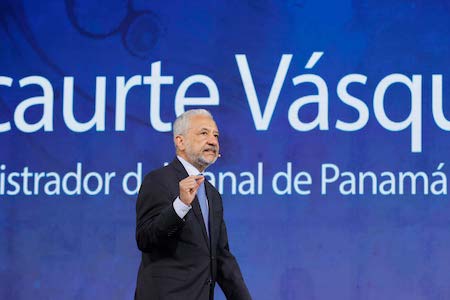
In an interview with SNIP Noticias, the administrator of the Panama Canal, Ricaurte Vásquez, explained that when navigation costs rise, more efficient routes gain importance within global trade.
“When crude oil and fuel prices rise, navigation costs become higher, and if the Panama route is shorter, it becomes a more attractive option,” he said.
This shift does not necessarily mean an increase in the number of vessel transits, but rather adjustments in how cargo is moved. According to Vásquez, shipping companies may decide to deploy larger vessels or reorganize container repositioning.
“What could be affected are three elements: cargo, manufacturing, and container repositioning. Instead of using a longer route, shipments may move through the Panama route,” he explained.
In this scenario, shipping lines may assign larger vessels. “It does not necessarily mean increasing the number of transits, but rather increasing the size of the ships, which represents additional revenue for the Panama Canal because we charge based on vessel size,” he noted.
Some of these adjustments could also lead to increased transshipment activity at port terminals in Panama as companies optimize their routes.
Vásquez also indicated that one segment where additional movement could occur is liquefied natural gas, particularly if Asian markets need to increase supply from the United States.
“In that case, the United States would need to supply that market, and having a shorter route becomes more important,” he explained.
The canal administrator added that the impact will largely depend on the duration of the conflict. If the situation stabilizes quickly—within the first few weeks or a month—the effect would likely be minimal and temporary. However, if tensions persist, shipping companies may begin to reassign maritime routes.
READ THE ORIGINAL ARTICLE HERE
Embassy of the United States in Panama Reminds Travelers to Schedule Visa Appointments for the 2026 FIFA World Cup

The Embassy of the United States in Panama informed citizens planning to travel in June to attend the 2026 FIFA World Cup that visa appointment scheduling is now available.
The diplomatic mission explained that, to begin the process, applicants must access the official portal and follow the system instructions. They also emphasized the importance of completing the process well in advance, since waiting times may vary depending on demand.
Key recommendations for the visa process:
- It is not mandatory to have match tickets before attending the consular interview.
- The embassy clarified that having World Cup tickets does not guarantee visa approval.
Panama in the Group Stage
The Panama national football team will have a historic participation in North America:
- MetLife Stadium, New York: Match against England national football team.
- Toronto, Canada: Matches against Ghana national football team and Croatia national football team.
READ THE ORIGINAL ARTICLE HERE
The Mikkelson Files: #4 – The Case of The Couch Conspiracy